Someone educate me...
holley79 wrote: The other day I was talking with a co- worker. She said her son was allegic to her BM. I was like  what do you mean. She said he was just allergic to it. I asked her what the Dr said. She said her Dr told her to quit nursing because she was making her baby sick. Well me I have to just ask a million and one questions to figure this out, what exactly do you mean? She said her son was lactose intolerant. what do you mean. She said he was just allergic to it. I asked her what the Dr said. She said her Dr told her to quit nursing because she was making her baby sick. Well me I have to just ask a million and one questions to figure this out, what exactly do you mean? She said her son was lactose intolerant.
Ok ladies educate me here. If a child is lactose intolerant you don't quit nursing YOU cut dairy/ lactose out of your diet right? Well me having a big mouth that I have said, "I don't think your Pedi knew what he was talking about."  Leave it to me to just make for a rough day at work. Leave it to me to just make for a rough day at work.
So someone shed some light on this.... PLEASE for my own sake. I probably just made a complete @$$ out of myself.... 
wcs40110 replied:  Okay I'm ranting agian but that made me steam a little bit. Okay I'm ranting agian but that made me steam a little bit.
"Human milk contains at least 100 ingredients not found in formula. No babies are allergic to their mother's milk, although they may have a reaction to something the mother eats. If she eliminates it from her diet, the problem resolves itself. " Source : http://www.fda.gov/fdac/features/895_brstfeed.html
You are so right. I was thinking that I'd read that so I searched it real quick. I had a friend who said if she had to cut milk out of her diet she's quit bfing. I don't understand how people are so lazy and ignorant. "I want the best for my baby but I don't want to sacrafice or put any effort into it." I dunno. I just feel like I'm set in my ways since I am BFing. My friend was like 'It just didnt work, he wouldn't latch, I breastfed him for like a month and thats the most important time anyways so formula was easier.' If she fed him for a month it was probibly working. (I remeber her feeding her son...) I was reading one of those things about people who think feeding a baby in public is gross and she said 'We have formula now" I'm like BUT THATS TOTALLY DIFFERENT!!!!! I don't care if all the support I have is my Dr and you guys I like feeding my baby and I love her little face while shes eating with milk dribbling from both sides. Any does it get any easier than just pulling a breat out? (Even if you have to pump while away like I do.)
PrairieMom replied: I gotta say, having done both, for me formula was definitely easier, hands down. However, I am dedicated to nursing my little one, even with all the problems we have been having. As for your coworker and her idiot Dr...
Seriously, how did that not send up a red flag for her? good grief.
CantWait replied:  Some PEDS got to get out of the stone age, and start educating themselves. To many of them are willing to just tell you to give up instead of giving you facts and answers. Some PEDS got to get out of the stone age, and start educating themselves. To many of them are willing to just tell you to give up instead of giving you facts and answers.
kimberley replied: while i am personally pro-breastfeeding and agree that it is best for baby, i do not agree it is the best choice for everyone. i would much prefer to see a mom fomula feed than jump in front of a train with her and her baby.
let's be real for a second, not every woman has the strength that is NEEDED to breastfeed the first year. it takes incredible sacrifice on a mother's part. while this comes easy to some of us, do not think that it does for everyone. it is hard and for some women, there is NO support. not from the doctors, family or even the child itself (latch problems, thrush, etc). exhaustion and insecurity are a normal factor of post partum for a first time mom... even some of us who have had 4. lets not judge each other.
we ALL want what is best for our kids.. for some, that means sanity over nursing. lets not use words like "lazy" or "ignorant" please.
Jamison'smama replied: I have a good friend whose poor son was allergic to ---dairy, soy, all root vegetables (carrots, potatoes, turnips), egg and all nuts. His amazing mother cut all that from her diet to breastfeed him for 18 months. She had to be a label reading fiend...dairy, egg and soy are in EVERYTHING. Finding a suitable formula would have been difficult and so hard on the baby.
That woman's doctor is very misinformed.
ediep replied: I think I remember my SIl being told that too by her sons ped. I could be mistaken but it wass omething called galactosemia ( I am sure I spelled that incorrectly) She was told to stop nursing too.
Her son is 6 now, and he doesn't have any allergies
holley79 replied: Well I think what led me to the whole Your doctor doesn't know what he's talking about was the fact that supposedly she was ALL for BFing. I am very fortunate and have a wonderful pro- BFing pedi. Before having her though I had online resources. (You all  ) Anyways I just don't get why so many Dr's don't try and figure out how to give other options to mothers then just telling them to quit. ) Anyways I just don't get why so many Dr's don't try and figure out how to give other options to mothers then just telling them to quit.
Kimberly is absolutely correct. BF is not for everyone. Everyone does what is best for their babes. 
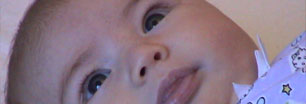
Jolyn replied: holley79~ Your little girl is sooooooooo adorable. Those eyes are so sweet!!! 
I don't have anything to add about the baby being allergic to BM but i do know my youngest couldn't tolerate some things....like milk products and so i stopped. It's not forever so i don't see a reason to not if it's going to keep my baby on bm. I nursed him for 18 months. It was a wonderful experience.
My first son however would never latch on and he was given expressed milk for three months.
Every baby is different.
Hillbilly Housewife replied: Galactosemia
Introduction:
Lactose is an important source of calories for most babies, whether from breast milk or formula. For babies with galactosemia, lactose becomes a poison.
What is it?
Lactose, or milk sugar, is made up of two simple sugars: glucose and galactose. Classic galactosemia is a condition where children lack the enzyme necessary to process galactose. Byproducts of galactose build up in the blood and are toxic to the kidney, liver, and brain. Also, byproducts of galactose can destroy ovaries (but not testicles, for unknown reasons).
Galactose is found in the diet primarily as lactose (in breast milk, milk-based formula, milk, cheese, butter, and many nutritional and pharmaceutical extenders). Galactose is now known to be present in many foods that do not contain lactose, especially beans and peas.
Who gets it?
Classic galactosemia is a rare recessive genetic disorder. The child with classic galactosemia inherits a gene for galactosemia from both parents, who are carriers.
What are the symptoms?
Children with classic galactosemia get very sick – unless lactose is removed from the diet. Most die during infancy if the galactosemia is not identified and treated. Common symptoms of classic galactosemia include jaundice, feeding difficulties, vomiting, poor weight gain, irritability, lethargy, seizures, cataracts, and mental retardation. The liver and spleen are usually enlarged.
Serious E. coli infections are more common in newborns with galactosemia. In fact, the infection may be diagnosed before the galactosemia.
Adolescent girls with galactosemia will usually not begin monthly periods.
Is it contagious?
No
How long does it last?
Galactosemia is a lifelong condition.
How is it diagnosed?
Widespread newborn screening for galactosemia in the United States has made undetected galactosemia uncommon. For those who have not been screened, a blood test or urine test can screen for the condition. Most people with galactosemia will develop obvious symptoms in infancy.
How is it treated?
Galactosemia is treated by removing lactose from the diet. Lactose is not a necessary part of the diet. Soy formulas are often used for babies. When babies begin solid foods, other sources of galactose must be avoided.
Removing galactose from the diet may prevent further damage to the kidney, liver, and brain. Cataracts go away, and growth problems resolve. Ovarian failure and learning problems are still common.
Strict observance of the diet does not always go along with the best outcome, suggesting either some damage before birth, or other factors involved.
How can it be prevented?
Galactosemia is not preventable, but further damage is often preventable by removing galactose from the diet.
Related A-to-Z Information:
Attention Deficit Hyperactivity Disorder (ADHD), Cataracts, Dehydration, E. Coli, Epilepsy, Fragile X Syndrome, Head Banging, Jaundice (Bilirubin, Hyperbilirubinemia), Phenylketonuria (PKU), Reye Syndrome, Tay-Sachs Disease, Vomiting
Alan Greene MD FAAP
www.drgreene.com
Simplebeliever replied: I agree with pretty much everything that's been said.
If you are bf'ing and your child is experiencing allergies, it's not the bm the baby is allergic too, it's something IN the bm. To continue bf'ing the mother would need to cut the triggers (whether it be dairy or soy or something else) out of her diet (and for some people that can be some serious commitment).
I take a very pro-breast feeding stance. I do understand and agree that it is not for every one, but I really get hot & bothered when ped's (who imho should know better) immediately suggest formula as an alternative. Those who have problems bf'ing their babies, but want to continue should be encouraged to do so and educated about whatever issue it is they are having.
Okay I'm stepping off my box now. 
coasterqueen replied: No, you didn't. She was misinformed and I am one who will make sure someone has the correct information. It's sad that BF relationships have to end because of uneducation medical professionals. For starters babies/children are not lactose intolerant. It's an adult thing. Babies and children are usually allergic to the dairy milk protein which is in just about everything known to man that we eat, so most professionals just assume it's a intolerance because they don't know any better. Scary, huh? If you get the milk protein out of your diet all will be peachy with the world. 
Now, I do know a LOT of people who use this as an excuse, or any for that matter that their doctor tells them to quit because they really wanted to and didn't want to feel guilty so the doc telling them to made things ok. That I have a HUGE problem with.  IMO if you want to quit, quit, if you feel guilty then you need to find the root of your guilt and deal with it, not blame it on someone else. IMO if you want to quit, quit, if you feel guilty then you need to find the root of your guilt and deal with it, not blame it on someone else.
Ok, off that, though. I was told with both girls that we had dairy issues so I spent months getting dairy out of my diet. In my case it didn't make a difference, but for a lot of people it did. I still, obviously breastfed, dairy just wasn't the problem.
I personally think the dairy milk protein isn't good for anyone but it's so hard to eat something w/o it in it. You basically have to eat all whole natural foods which we try to do but not always so easy with as many boxed prepared foods and fast food out there. I think a lot of people would have less health issues (gastro mainly) if it was eliminated from our diets. There is a reason why cow's milk was made for cows 
Ok, off my high horse here. In the end, I do not think you did anything wrong. If anything I think you could help her to see that this isn't the case and the next baby she has, if any, she doesn't have to listen to the doc about it. That is if she wants to breastfeed.
ETA that in some cases, quite a few it's not the dairy milk protein, but maybe wheat or in a lot of cases if a baby is allergic to one they are allergic to the other. Some are allergic to soy too. So there are several things you have to look at when cutting things out of the diet.
|